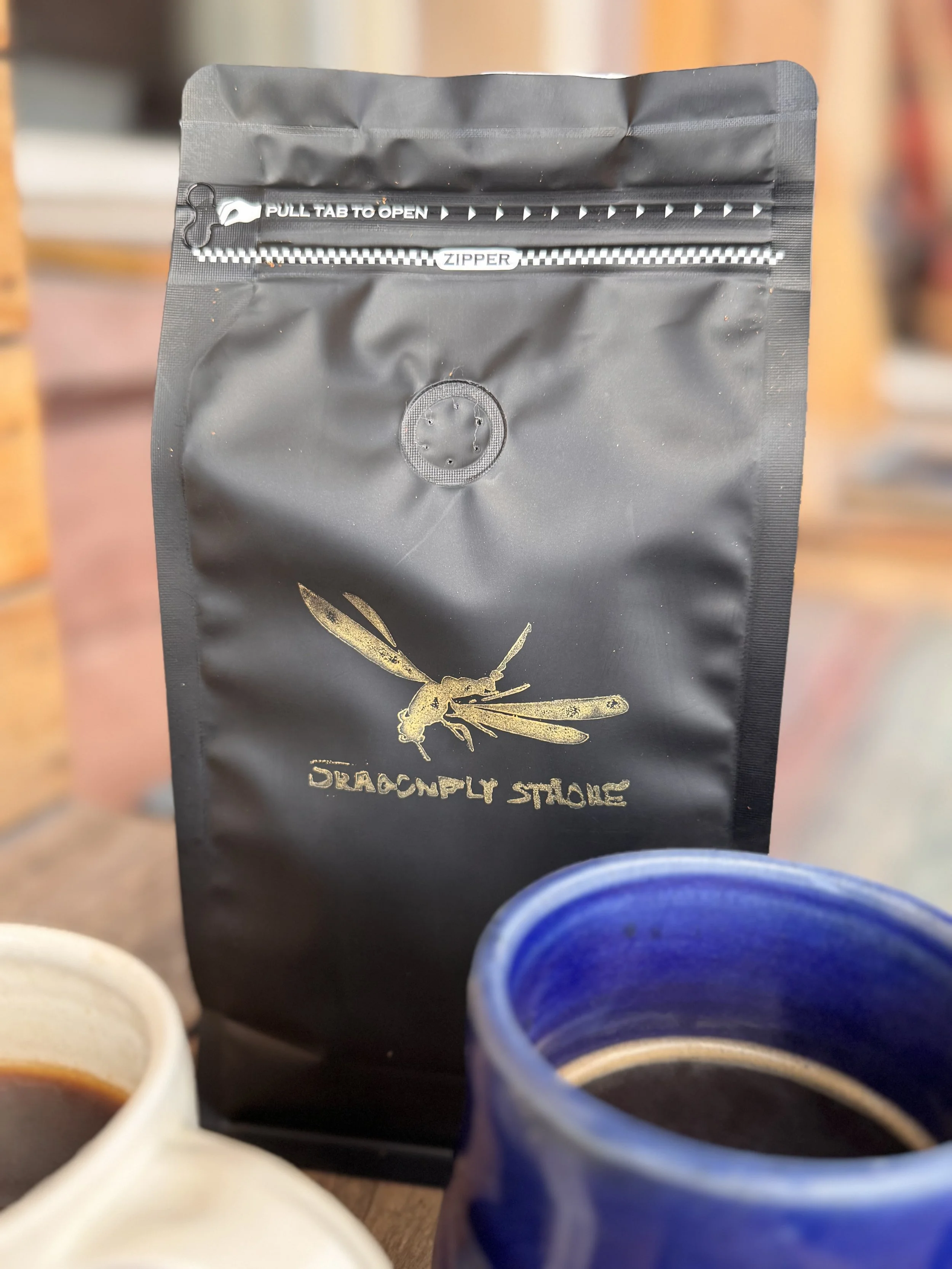
Congo Org. Kivu - Virunga Coffee - Katanda Station - Washed Processed | 22 oz roast @ 8.49per LB + $15 roast fee

$27.36

his lot comes from the Katanda Coffee Washing Station, one of seven stations operated by Virunga Coffee Company in the Kivu provinces of eastern Democratic Republic of Congo. Virunga was set up by Schluter, now Olam, in 2012, with a simple idea behind it: build specialty-grade processing capacity close to the farms, and push real premiums back to the thousands of smallholders who deliver cherry to it. There is no single estate behind this coffee. It is the pooled work of a lot of very small farms, and Katanda is where that cherry gets sorted, floated and turned into something exportable.

Katanda village sits in the Isale region of North Kivu, in Lubero territory, north of Lake Kivu and right on the edge of Virunga National Park, with the Ugandan border just to the east. Coffee grows here between 1,500 and 1,800 masl on deep volcanic soil, with plentiful rainfall and enough elevation to keep cherry maturing slowly. Growing conditions have never been the problem in this corner of the Congo. Infrastructure has: rough roads, no processing nearby, and almost no access to buyers who pay for quality. Virunga has worked that side directly, with hands-on farmer education and investment in local roads and bridges, seven full-time field agronomists working in the region, and more than 400,000 seedlings distributed to smallholders in Isale. Over 2,300 farmers have now been trained in good agricultural practices and hold organic certification.

The trees are Bourbon, and the lot is certified organic and Rainforest Alliance. Processing is fully washed. Ripe cherry is delivered to the station, sorted and floated so only dense, ripe fruit moves forward, then pulped, washed and dried in the sun on raised African beds. Dried parchment is rested in a cool, dry store for a month or two before it goes to dry milling for hulling, grading and sorting. It ships in 60 kilo bags with GrainPro or Ecotact liners, which matters on a trip this long out of eastern Congo.

Tasting Notes: This is the traditional Congo, best at medium to dark roasts. A heftier cup with more rustic dark chocolate and spice notes, good body and mouthfeel with a little hint of brightness upfront at light-medium roasts, put there to remind you its still an African. Although its a stronger tasting, lower acidity and darker toned cup, it is surprising clean for a wild production Congo coffee. Smooth, rich and clean cups out of the Congo are a rare gem, especially with their current turmoil. Light roasts themselves promote a citric crispness upfront and will still pull some balance with the richer darker tones, but they come off a bit more nutty with just a hint of the chocolate base note. Medium roasts drop the acidity to just a hint, bringing nice definition to the rustic chocolate and slight spice notes, smooth and creamy cup with a bit of exotic spice. Darker roasts promote a rougher bakers chocolate edge but it co-mingles with the roasty and rustic spice notes very nicely. For daily drip or pour-ever, keep it more in the medium roast ballpark. Iced or espresso, a little darker roast was preferred.

Burman Coffee Traders*

Roast Profile:

his lot comes from the Katanda Coffee Washing Station, one of seven stations operated by Virunga Coffee Company in the Kivu provinces of eastern Democratic Republic of Congo. Virunga was set up by Schluter, now Olam, in 2012, with a simple idea behind it: build specialty-grade processing capacity close to the farms, and push real premiums back to the thousands of smallholders who deliver cherry to it. There is no single estate behind this coffee. It is the pooled work of a lot of very small farms, and Katanda is where that cherry gets sorted, floated and turned into something exportable.

Katanda village sits in the Isale region of North Kivu, in Lubero territory, north of Lake Kivu and right on the edge of Virunga National Park, with the Ugandan border just to the east. Coffee grows here between 1,500 and 1,800 masl on deep volcanic soil, with plentiful rainfall and enough elevation to keep cherry maturing slowly. Growing conditions have never been the problem in this corner of the Congo. Infrastructure has: rough roads, no processing nearby, and almost no access to buyers who pay for quality. Virunga has worked that side directly, with hands-on farmer education and investment in local roads and bridges, seven full-time field agronomists working in the region, and more than 400,000 seedlings distributed to smallholders in Isale. Over 2,300 farmers have now been trained in good agricultural practices and hold organic certification.

The trees are Bourbon, and the lot is certified organic and Rainforest Alliance. Processing is fully washed. Ripe cherry is delivered to the station, sorted and floated so only dense, ripe fruit moves forward, then pulped, washed and dried in the sun on raised African beds. Dried parchment is rested in a cool, dry store for a month or two before it goes to dry milling for hulling, grading and sorting. It ships in 60 kilo bags with GrainPro or Ecotact liners, which matters on a trip this long out of eastern Congo.

Tasting Notes: This is the traditional Congo, best at medium to dark roasts. A heftier cup with more rustic dark chocolate and spice notes, good body and mouthfeel with a little hint of brightness upfront at light-medium roasts, put there to remind you its still an African. Although its a stronger tasting, lower acidity and darker toned cup, it is surprising clean for a wild production Congo coffee. Smooth, rich and clean cups out of the Congo are a rare gem, especially with their current turmoil. Light roasts themselves promote a citric crispness upfront and will still pull some balance with the richer darker tones, but they come off a bit more nutty with just a hint of the chocolate base note. Medium roasts drop the acidity to just a hint, bringing nice definition to the rustic chocolate and slight spice notes, smooth and creamy cup with a bit of exotic spice. Darker roasts promote a rougher bakers chocolate edge but it co-mingles with the roasty and rustic spice notes very nicely. For daily drip or pour-ever, keep it more in the medium roast ballpark. Iced or espresso, a little darker roast was preferred.

Burman Coffee Traders*

Dukunde Kawa is a well-known producer group in Rwanda, as much for exceptionally

bright and memorable coffees as for its exceptional business structure: the cooperative

carries multiple certifications for its various washing stations including Fair Trade,

Organic, Rainforest Alliance, and UTZ, and more than 80% of its workforce is women.

Not only that but the organization is located in the Northern province, which, despite its

closeness to Kigali, tends to be little-known in specialty coffee compared to the west

and south. Since first organizing in 2000 with a single wet mill, years before the majority

of washing stations in Rwanda even existed, Dukunde Kawa has received sustainability

awards from the SCA as well as placing in the top positions in Rwanda’s Cup of

Excellence competition. Today the cooperative has over 2,000 farmer members and 4

washing stations in the Gakenke District north of Kigali. Ruli is one of these stations.

Ruli was established by Dukunde Kawa in 2004 and originally served 300 local coffee

farmers. Today there are over 800 contributing farmers and Ruli is Dukunde Kawa’s

largest station. This is one of the highest elevations that Dukunde Kawa serves, with

farms passing 2100 meters. Ruli itself sits at 2100 meters, making it one of the highest

washing stations in the country. Because of the high elevation and local climate, harvest

here progresses slowly and members annually pick coffee into the month of October,

multiple months past the majority of the country.

Processing at Ruli includes cherry sorting by the farmers themselves upon delivery. The

cherry is then floated in a large receiving bay to identify and remove floaters (low-

density cherry which is processed separately). Cherry is then depulped and the fresh

parchment is graded immediately by flotation in a short channel. Fermentation usually

lasts 18 hours and is completed without water. Once the dry fermentation is complete

the parchment is soaked in fresh water between 18-24 hours to halt fermentation and

the stabilize moisture content of the batch. After the soak the parchment is washed

once again, this time in grading channels—long shallow concrete channels with water

flowing through—which allows the parchment to naturally separate by density. From

here, each separate density grade is moved to pre-drying tables to be hand-sorted for

imperfections and gently dried to the touch. After the hand-sort is complete, the

parchment is then moved to fully-exposed drying tables to finish drying, a process that

takes between 14-21 days depending on the climate.

Despite its diminutive size compared to other East Africa coffee producing countries,

Rwanda’s coffee has an important history and terroir entirely unique to the rest of the

continent. Coffee was originally forced upon remote communities by the Belgians as a

colony-funding cash crop. The Belgians distributed varieties cultivated by the French on

Ile de Bourbon (now Reunion Island, near Madagascar) but had so little invested in

coffee’s success that they immediately allowed production to decline through lack of

investment in national infrastructure, as well as the farmers who grew it. As a result, the

sector suffered near total obscurity in the coffee world from Rwanda’s independence in

1962 until the period of rebuilding following the country’s devastating civil war and

astonishingly tragic genocide in 1994.

Rwanda’s former cash crop, however, roared to international buyer attention in the late

2000’s thanks to one of East Africa’s most successful coffee interventions, the

Partnership for Enhancing Agriculture in Rwanda Through Linkages (PEARL). PEARL

was a sweeping infrastructure and education investment targeting large regions of

Rwanda whose coffee was for the most part processed poorly at home and exported

with little traceability. The program, designed and led by the University of Michigan,

Texas A&M and a host of Rwandan organizations, vastly increased processing hygiene

by building washing stations. It also organized remote and under-resourced

smallholders into cooperative businesses capable of specialty partnerships. Perhaps

most significantly for the long term, it took the legacy bourbon genetics buried in

abandon and polished them anew to the amazement of coffee drinkers everywhere. The

snappy acidity, stone fruit flavors, and fragrant herbaceousness found in Rwanda’s

coffee is still completely unique to bourbon produced anywhere else in the entire world.

Producer groups like Dukunde Kawa cherish their farmers’ potential and are learning to

maximize the quality and variety available from Rwanda’s most promising terroirs.

Good at almost any roast, would start where you personally tend to enjoy coffees, a

medium roast is great if unknown. Easy to roast, even roasting with medium to low

chaff.